
Why Everyone Deserves the Joy of Cycling
Inclusive cycling is about making sure everyone, regardless of age, ability, or experience, can enjoy the freedom and joy of riding a bike. It's a movement and a mindset that aims to remove barriers, create welcoming environments, and provide the right equipment—like trikes, handcycles, or tandems—so that cycling truly is for every body. It's about empowering individuals and opening up new possibilities for mobility, health, and connection.
The statistics tell a powerful story. Research from the UK shows that 69% of disabled cyclists find cycling easier than walking, as it reduces strain on joints and aids balance. Yet many who could benefit don't know these options exist or face obstacles to funding access or ability to test ride, that keep them from riding.
Inclusive cycling opens doors that traditional bike shops often leave closed. It's about recognising that the right bike for you might not look like what you expect—and that's perfectly okay.
I'm Andrea Herklots, owner-operator of EveryBody eBikes. I've spent years helping multitudes of riders across Australia find what inclusive cycling can mean for their lives. I’ve seen how the right bike can restore independence, confidence, and pure joy for active seniors, older commuters, young families, and people with disabilities.
What is Inclusive Cycling and Why Does It Matter?
At its heart, what is inclusive cycling is a shift in mindset. It’s the idea that cycling isn't just for the super fit, but a powerful tool for independence, health, and happiness available to every person. We believe in removing all barriers—physical, mental, and social—that stop someone from riding. And we try to offer a range of pricing to help with financial barriers too.
For many, getting on a bike can feel daunting due to changes in mobility, balance, or confidence. But with the right support and equipment, cycling can be easier than walking. A 2017 study in the UK showed that for many disabled cyclists, riding a bike eased joint strain, helped with balance, and made breathing smoother. This highlights the empowering potential of inclusive cycling. And the benefits are not all physical. Many research articles confirm what we all know: bike riding makes you feel better - it helps you clear your head and relax and breath in the fresh air, helping riders put everything into perspective.
The Life-Changing Benefits of Riding for Every Body
The ripple effects of inclusive cycling are truly life-changing for individuals and communities.
- Physical Health: Cycling offers a gentle, low-impact workout. It's easy on your joints, strengthens muscles, and boosts heart health. For many, especially older adults, a stable three-wheeled cycle can significantly improve balance and reduce joint strain.
- Mental Wellbeing: Getting outside and moving your body does wonders for your mind. Cycling helps reduce stress, lifts your spirits, and gives you a real sense of accomplishment.
- Gaining Confidence: There's a powerful feeling that comes from getting back on a bike or trying an adaptive cycle. It's about overcoming perceived limits and rediscovering the joy of movement, which builds immense self-confidence.
- Independence and Freedom: Imagine the freedom of riding to the shops or exploring a new path without needing a car or relying on others. Inclusive cycling gives you that independence, opening up your world.
- Social Connection: Cycling is a fantastic way to connect with people. Whether you're riding side-by-side on a tandem, joining a group, or simply waving to fellow riders, it fosters social bonds, helps you keep up with your partner, and improves community access.
- Connectedness: With loneliness being one of the most significant social concerns of the decade, riding a bike helps connect you with others in your neighbourhood in ways that single car use or even shared car use cannot achieve.
Finding Your Perfect Ride: A Look at e-bikes and Adaptive Cycles
Finding your perfect ride means finding a cycle that accepts who you are and how your body moves. At EveryBody eBikes, we believe the bike should fit the person, not the other way around. We focus on personalised solutions that put your comfort and safety first, whether you're worried about confidence, keeping up with a partner, or finding a bike that suits your specific needs. This includes options which are with 2- and 3-wheels. We have a carefully curated range that combine excellent quality models with a range of function, design, stability and comfort levels to suit differing budgets.
Comfort Bicycles: The ease of Two Wheels
Many riders start on a 2-wheeled bike that has a high cross-bar and large, easy rolling wheels. But as we age, swinging our leg over that bar and being able to clear the rear wheel and sometimes the basket/bags and/or passenger at the rear, make this option less suitable. We love our step-through models that make getting on and off the bike so much safer and help when stopping at intersections as well. At EveryBody eBikes, we have a range of bikes that focus on safe and comfortable design to keep you riding on two wheels longer. We even offer smaller, lighter models that are easier to move around both on and off the bike, if you are getting fed up with hefting a heavy bike all the time.
Tricycles: The Power of Three Wheels
If you're worried about balance, three wheels can give you back your confidence. There's no rule that says cyclists must balance on two wheels. A trike's stability means you can stop anytime and stay perfectly upright, removing the anxiety of wobbling or getting on and off. For many, tricycles are life-changing. We offer both upright trikes and semi-recumbent trikes, and the choice comes down to what feels most comfortable for your body and back.
Tandems and Companion Cycles: Riding Together
Tandems and companion cycles make it possible for people with different abilities to ride together. Side-by-side tandems let two riders sit next to each other, perfect for social connection. Traditional tandems place riders one behind the other, which works well for supporting riders with vision impairment or when more than 1 passenger wants to sit at the rear. We even offer solutions to keep grandparent, grandchild and parent all on the same bike! These cycles ensure no one gets left behind.
Semi-Recumbents
Semi-Recumbents offer a unique cycling experience. These tricycles feature a comfortable, reclined seating position, with a lower ride position than a traditional upright trike. Although they are similar, having three wheels, the lower centre of gravity offers improved and inherent stability. This design significantly improves safe transfers, postural stability while riding and of course reduces pressure on wrists, back, and neck, making them ideal for riders seeking comfort or those with balance concerns. The Trident model, EveryBody eBikes best-selling design, is widely renowned for being a wonderfully comfortable and ergonomic ride. For older children to the aged, this model makes everyone feel safe. The design just brings joy to the rider and keeps everyone in the "seat" for so much longer than they imagine they could achieve. Some even keep sitting in the seat long after the ride has finished!
The Gentle Boost of Electric-Assist
Electric pedal-assist technology is like having a supportive friend on your ride. It doesn't take over, it just makes things easier. Hills that used to intimidate you become manageable. Fatigue becomes less of a concern, allowing you to ride longer and explore further. It’s not about speed—it’s about support, confidence, and the freedom to ride at your own pace. At EveryBody eBikes, we have designed controllers that enable us to temper the power delivery to suit the needs and abilities of the rider. That way, we can safely get young children benefiting from a gentle boost on the flat and on hills, enabling them to independently ride rather than relying on others to push off. And with our more nervous riders, we can adjust the power at each level so it suits them, their local neighbourhood and their decision making processes. True adaptability integrated into our design to ensure that the power available is ideal for the rider. And of course, all our models can be ridden without power if needed (but why would you!!)
Overcoming Roadblocks: The Real Barriers to Inclusive Cycling
When someone isn't cycling, it's almost never because they don't want to. Instead, the real challenge often comes from the external obstacles in their path. These are genuine, systemic problems that can feel incredibly frustrating and isolating. Many of these barriers exist because decisions were made without considering the diverse needs of every potential rider.
What are the common barriers to inclusive cycling?
Understanding these barriers is the first step to overcoming them. We have experienced many and overcome even more. Just ask us how!
- Infrastructure: Often, the biggest challenge. Paths can be too narrow, and gates might block larger cycles like trikes or handcycles. Finding safe places to park these bigger bikes can also be a real headache. Having connections between purpose-designed cycleways to improve accessibility for all, including those who require adaptive bikes, is essential to improve uptake. Everyone wants to feel safe while riding and those who are less able, often feel vulnerable when sharing spaces with faster, larger and more dangerous vehicles.
- Cost: Adaptive cycles are often custom-made and specialised, which makes them more expensive than standard bikes. In fact, research shows that 31% of people who could benefit from a non-standard cycle simply can't afford one. The NDIS, charities and age care packages may be able to reduce this burden. Remember when considering costs, much research and development (with inherent costs for design, production and modification) has gone into the design and supports offered with adaptive cycles and they are not standard bikes or trikes.
- Social Attitudes: Some people wrongly assume that differently abled individuals can't cycle. This can lead to uncomfortable stares or unhelpful comments. Shockingly, nearly half (49%) of disabled cyclists using their cycle as a mobility aid have been asked to get off their bike. We say to our customers, just stand your ground and let those more able-bodied move around you. They move more easily and freely and have the abilities to make choices which may be limited by space for an adaptive cycle rider.
- Lack of Representation: If you don't see people like yourself riding, it's easy to feel like cycling isn't for you. The good news is though that tricycles are now far more often seen on our shared pathways and parks. All shapes and sizes are starting to be seen throughout Australia and their numbers are growing.
- Confidence and Knowledge: The fear of falling is a very real concern. This, along with a general loss of confidence after a long break from cycling, can feel like a major barrier. Again, careful and intelligent design helps offer the supports for a range of conditions and confidence levels and being able to test ride in a safe and non-challenging environment often encourages people to build that confidence and knowledge of their abilities even in a short period.
These barriers aren't permanent walls. They are challenges that can be addressed with the right support, equipment, and community backing. We help people find solutions every day and love sharing the experience and riding together with our adaptive bike customers in group rides to raise awareness of how bike riding can make you feel.
In the Rider’s Seat: Tania’s Journey to Freedom on Three Wheels
When Tania first reached out to us in 2022, she was searching for a way to reclaim her independence. Living with chronic back pain, she’d watched her once-active lifestyle slip away along with the social connections that came with it. Her injuries had made walking and traditional cycling too painful, but she wasn’t ready to give up. Tania was determined to find a way forward, and she was curious if an electric trike (one suited to her body and needs), could be funded through the NDIS.
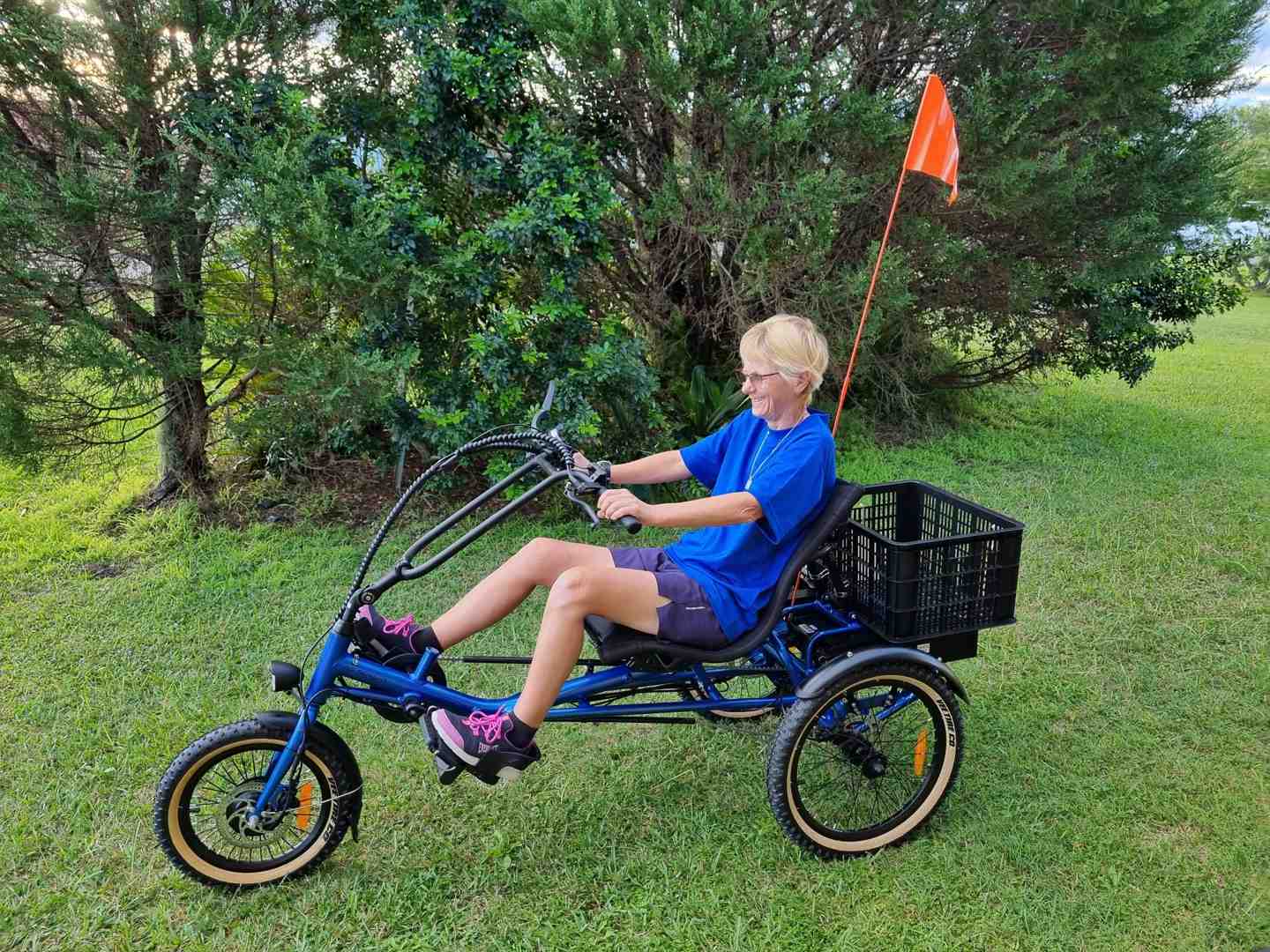
We met up with Tania during a trip south and introduced her to the Trident, a sit-down, semi-recumbent electric tricycle designed for comfort and support. From the moment she eased into the seat and leaned back into the full backrest, she knew this was different. Even during the trial ride, with a few adjustments to the backrest angle, she felt safe, supported, and most importantly hopeful. The wind in her hair brought laughter and a sense of freedom she hadn’t felt in years.
Now, after working closely with her OT and navigating the NDIS process, Tania has her very own electric trike fully funded through NDIS as an adaptive tricycle with power (Assistive Technology), funded through S.10 Core Supports in her NDIS plan. She’s no longer watching from the sidelines while others ride, walk, or explore. She’s out there too riding alongside her partner, reconnecting with her community, and rediscovering the joy of movement. We’re so proud to have been a part of her journey and honoured she chose EveryBody eBikes to help turn her vision into reality.
What is the future of inclusive cycling?
We are excited about the future. Growing awareness is changing how people think about who belongs on bike paths. Better technology, like more refined electric pedal assist and adaptive cycle designs, continues to make riding more accessible.
Most importantly, stronger communities are forming around inclusive cycling, normalising diverse ways of riding. Advocating for change remains crucial for better infrastructure and funding, but we are optimistic. By working together, we can ensure that cycling becomes something every body can enjoy.
We often see people disappointed in lack of funding from government agencies, but we work closely to get them riding regardless if we can, as everyone should have the right to be able to ride if they see this as a better way to protect and improve their health and well-being.
Frequently Asked Questions about Inclusive Cycling
We often hear heartfelt questions from people wondering if they can reclaim the joy of riding. We hope these answers provide the clarity and reassurance you need.
Is an adapted bike or trike hard to ride?
Adapted bikes and trikes are designed to make riding easier. The biggest difference with a trike is its stability because you can stop without wobbling or fearing you'll tip over.
But it is important to note that an upright trike can be tricky to ride. If you have recently been riding on two-wheels, the transition is not always an easy one. Being forced to lean and steer differently after potentially decades of history riding bikes, just is too challenging for some. And for those, we recommend a sit-down trike rather than an upright trike. Options exist and we help you find the right one for you.
While steering feels different at first, the confidence you gain from knowing you won't fall far outweighs the brief adjustment period. Most people adapt within their first few rides. We recommend booking a no-pressure test ride to experience how stable and reassuring these bikes can be.
Can I use an adapted cycle on regular bike paths?
Absolutely! The vast majority of Brisbane's rail trails and bike paths are perfect for adaptive cycles. However, some older infrastructure can still present challenges, like narrow gates or tight corners that stop wider trikes. These are design flaws, not a problem with your bike. This is why we advocate for better, wider, and more accessible designs that benefit all riders, including families with cargo bikes or anyone who prefers more space.
I haven't ridden in decades. Is it too late for me?
This is the most important question we answer, and our response is always the same: It is never, ever too late to rediscover the joy of riding.
So many people convince themselves their riding days are over, but you are not too late. Modern e-bikes and trikes are designed to welcome you back. Electric assist helps with hills and extends your range, while the stability of a trike removes the fear of falling. We've helped riders from 4 to 104 get back on a bike. You're not alone in feeling this way, and we're here to help you stay on your bike or get back on one if you thought those days were gone forever.
Your Journey to Riding Starts Here
Inclusive cycling is about reclaiming your freedom, independence, and joy. It's the understanding that with the right support and equipment, barriers can melt away. If you've ever thought you were "too old," "too out of shape," or "too nervous," we want you to know you're not too late. At EveryBody eBikes, we believe riding is for you—in your body, at your pace.
We are the home of inclusive cycling in Australia. We're not an average bike shop; we empower you with custom-fit solutions and expert guidance. Whether you need to get on your bike, stay on your bike, or get back on your bike, we're here to make it happen.
Our Brisbane showroom offers the largest range of trikes in Australia, including upright, semi-recumbent, cargo and passenger trike options. Every bike and trike is assembled, test-ridden, and customised by our expert team in our dedicated workshop, designed to handle large bikes and trikes and with easy access to wheel right in.
Explore our range of inclusive electric bikes and trikes and find the perfect ride to start your journey!