
Why Electric Bike Fault Finding Matters for Every Rider
Electric bike fault finding doesn't have to be daunting. When your e-bike suddenly cuts out, makes a strange noise, or the display goes dark, that feeling of freedom can turn into frustration. Here's what to look for first:
- No power at all? Check battery charge, connections, and fuse.
- Display not working? Verify cable connections and battery status.
- Motor not engaging? Inspect throttle, pedal-assist sensor alignment, and motor connections.
- Intermittent power loss? Look for loose wires, corroded pins, or battery contact issues.
- Strange noises? Check for debris, loose parts, or worn motor bearings.
The good news is that most e-bike faults are simpler than they seem and can often be fixed at no cost. Your e-bike is designed to be reliable, but when something goes wrong, knowing how to troubleshoot can save you time, money, and a trip to the repair shop.
This guide breaks down electric bike fault finding into simple, manageable steps. As the owner-operator of EveryBody eBikes, my mission is to make cycling accessible for every body by empowering you to understand and care for your ride. Let's get your e-bike rolling again.
Know your electric bike fault finding terms:
Getting Started: Safety, Tools, and Basic Checks
Before diving into specifics, let's cover the essentials.
Safety First, Always Before any check, disconnect the battery. This simple step prevents accidental shocks and protects your bike’s sensitive electronics.
Essential Tools for Your Toolkit You don't need a full workshop. A few key tools will handle most basic electric bike fault finding:
- Basic Bike Tools: A set of Allen keys, screwdrivers, and pliers.
- Digital Multimeter: Essential for diagnosing electrical problems by checking voltage and continuity.
- Cable Ties and Electrical Tape: For securing loose wires after a fix.
For more recommendations, see our guide on E-bike Repair Kits: What Every Rider Needs in Their Toolkit.
Visual Inspection: Your First Check Many issues can be spotted with a quick look. Check for:
- Secure Connections: Ensure all electrical connectors are snug.
- Loose or Damaged Wires: Look for anything snagged, stretched, or out of place.
- Corroded Pins: Check inside connectors for green or white dust, which indicates corrosion.
- Water Damage: Look for moisture or rust around electrical components.
These basic checks can often solve the problem before you even pick up a tool. The main electrical components we'll be focusing on are the battery, controller, motor, display, and sensors.
Diagnosing Power and Display Issues
When your e-bike won't power on or the display is blank, these are often the most straightforward issues to diagnose.
No Power or Blank Display
- Check the Battery: Is it charged? Is it seated properly in its mount? A dead or loose battery is the most common culprit.
- Inspect Connections: Ensure the battery is securely connected to the bike. Follow the cable from your display and ensure it's firmly connected to the main wiring harness. Look for bent or corroded pins.
- Check the Fuse: Some batteries or wiring systems have a fuse. If it's blown, there will be no power. Inspect it to see if the wire inside is broken.
- Restart the System: Like a smartphone, an e-bike can sometimes benefit from a reboot. Disconnect the battery for a few minutes, then reconnect it and try again.
Intermittent Power Loss If power comes and goes, it's usually a loose connection. Check:
- Battery Contacts: Ensure the metal contacts where the battery connects to the bike are clean and making a solid connection.
- Wiring Harness: Inspect the main wiring for any fraying, cuts, or loose connectors, especially over bumps.
- Brake Lever Switches: Many e-bikes have safety switches in the brake levers that cut motor power. If a switch is faulty or a lever is stuck, it can cause power cuts. Ensure your brake levers return fully.
For more tips, check out our Maintenance Tips: Electric Bike & Trike guide.
Troubleshooting the Drive System: Motor, Throttle, and Pedal Assist
When the drive system isn't working, your ride can feel sluggish or not move at all. Here are some common electric bike fault finding scenarios.

Motor Not Engaging or Making Noise If the motor isn't responding or is making grinding sounds:
- Check the Basics: Is the battery charged and the display on? Are there any error codes? As mentioned, ensure brake levers are fully returning.
- Motor Connections: Check the thick cable coming from the motor to ensure it's securely connected.
- Strange Noises: Visually check for debris caught in the motor housing or loose bolts and spokes. A persistent internal grinding may indicate worn bearings, which requires professional attention.
Throttle and Pedal Assist (PAS) Issues If you get no boost when using the throttle or pedalling:
- Throttle: Check its cable connection. Ensure the grip isn't physically stuck and returns smoothly. A very low battery can also limit throttle power.
- PAS Sensor Alignment: This is a very common issue. The Pedal Assist System (PAS) has a magnet ring on the crank and a sensor on the frame. The gap between them should be small (around 5-10mm). Make sure the sensor and magnets are clean and haven't been knocked out of alignment.
- PAS Wiring: Trace the cable from the PAS sensor to the controller and check for a secure connection.
Understanding your motor type can also help. Check out our guide on Which E-bike Motor Suits Me Best?.
A Step-by-Step Guide to Electric Bike Fault Finding
Now that we've covered individual components, let's use a systematic approach for electric bike fault finding to isolate the problem efficiently.
The Systematic Approach to Diagnosis
- Observe: What’s happening? Are there error codes? When did it start?
- Start Simple: Always begin with the easiest checks, like battery charge and connections.
- Isolate the Fault: Try to narrow the problem down. If the motor isn’t working, is the display on? This helps eliminate possibilities.
- Consult Your Manual: It often has a troubleshooting section and explains error codes.
Example: No Power Checklist
- Battery: Is it charged and securely clicked into place?
- Display: If it's not working, check its connection to the main wiring harness.
- Error Codes: Check the display and consult your manual.
- Brake Levers: Ensure they are fully released, as stuck brake switches cut motor power.
- Wiring: Visually trace all major cables for damage or loose connections.
- Controller: If all else fails, the controller (the bike's "brain") might be the issue.
Advanced Electric Bike Fault Finding and Diagnosis
If basic checks don't solve the issue, a digital multimeter can provide deeper insights for electric bike fault finding.

Using a Multimeter
- Voltage Checks: Set your multimeter to DC voltage (VDC) to test your battery and charger. A fully charged 36V battery should read around 42V, and a 48V battery around 54V. A low reading points to a battery issue. You can also test your charger's output plug to see if it's faulty.
- Continuity Tests: Use this mode (which usually beeps) to check for broken wires. Touch the probes to each end of a wire; a beep means the wire is intact.
Controller and Wiring Troubleshooting The controller is the e-bike's brain. If you suspect an issue:
- Check all connections to and from the controller.
- Look for an external or inline fuse and check if it's blown.
- Reset the system by disconnecting the battery for a few minutes.
For wiring, visually inspect the entire harness for cuts, pinch points, or frayed cables. Use your multimeter's continuity test on any suspicious wires.
The "Swap-Out" Method For parts that are hard to test directly (like controllers or displays), the "swap-out" method is a powerful diagnostic tool. Temporarily connect a new, known-working part. If the problem is solved, you've found the faulty component. Always use a compatible part and disconnect the battery before swapping.
For more detailed servicing insights, our Bafang Servicing at Everybody E-bikes guide provides excellent information.
Repair or Replace? Making the Right Call
Once you've found the fault, you must decide whether to repair or replace the part.
DIY vs. Professional Help Simple fixes like cleaning connections or realigning a sensor are great for DIY. However, internal repairs on sealed components like motors, controllers, or batteries are best left to professionals. Attempting these can be unsafe and may void your warranty.
When to Replace Components Most electrical components are sealed units and are replaced, not repaired.
- Controllers & Motors: Internal failures almost always require a full replacement.
- Batteries: Never attempt to repair a battery pack yourself due to fire risk. Always replace a faulty battery.
Component Lifespan
- Battery: Expect 3-5 years or 500-1000 charge cycles before performance drops.
- Motor: Generally robust, but failures from overheating or water damage usually mean replacement.
- Controller: Can fail from power surges or water damage and are typically replaced.
Regular servicing helps identify issues early. Learn more in our guide on How Often Should You Service Your E-bike or Adaptive Trike?.
When You Need an Expert Hand
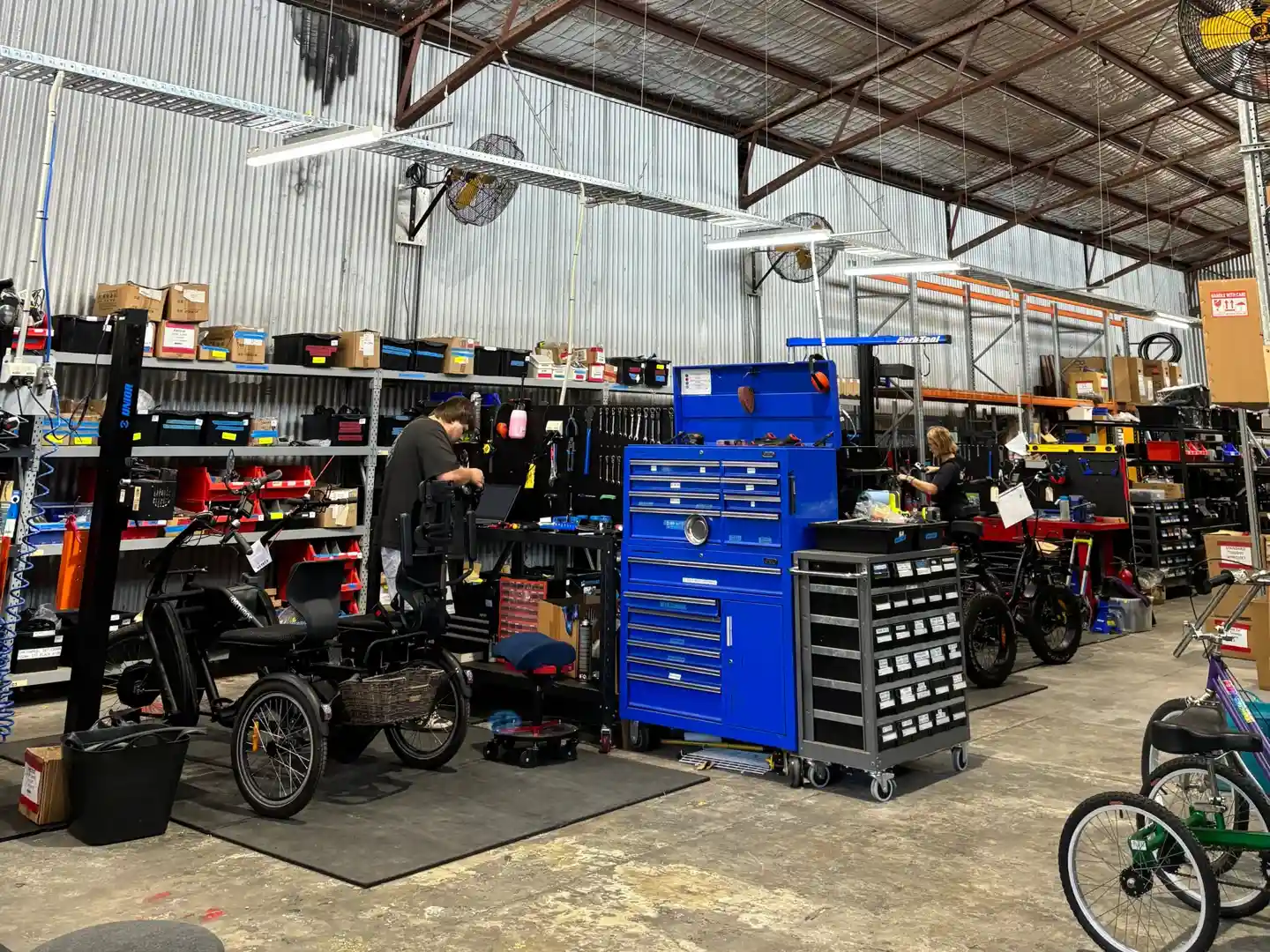
Sometimes, despite your best electric bike fault finding efforts, a problem requires an expert. Knowing when to call a professional is smart, not a defeat.
When to Call a Pro
It's time to seek professional help for:
- Complex Repairs: Internal motor or controller work requires specialised tools and knowledge.
- Battery Issues: For safety, any problem inside the battery pack must be handled by a professional.
- Firmware Updates: Modern e-bikes often need software updates that only authorised service centres can perform.
- Persistent Faults: If you can't find the source of an intermittent problem, our diagnostic equipment can.
Peace of Mind with EveryBody eBikes
At EveryBody eBikes, our expert-designed diagnostic process finds the real cause, saving you from replacing parts unnecessarily. We use only high-quality components for all repairs, ensuring your e-bike is serviced to the highest standards for lasting performance. When you trust us with your e-bike, you get the confidence that comes from knowing your bike is in the hands of people who genuinely care.
Your Go-To Guide for Brisbane E-Bike Servicing
When your electric bike fault finding hits a wall, it’s good to know where to turn. For riders in Brisbane and the surrounding areas, EveryBody eBikes is your local expert for reliable servicing and after-sales support.
It's time to call us when you face persistent issues, complex electrical faults, confusing error codes, or any repair that feels beyond your comfort zone, especially those involving safety.
Booking a Service with EveryBody eBikes
We've made it easy to get the care your e-bike needs. Before you visit, check our Your Bike Service Checklist for a smooth visit.
Our key servicing options include:
- Checkup Package: $100
- Standard Service: $169 ($149 for repeat customers)
- Premium Package: $299 ($269 for repeat customers)
- Battery Testing: $50
- Electrical Diagnosis: $200 (for complex fault finding)
- Mechanical Labour: $150 per hour
A $75 cleaning fee may apply if your bike is not brought in reasonably clean.
We are proud to offer some of the highest-quality servicing in the Australian market, using state-of-the-art diagnostic tools. Ready to get back on the road with confidence? Book Your Electric Service today.