
Why elderly electric tricycles are changing lives for active seniors

Elderly electric tricycle options give older adults a practical, stable, and confidence-inspiring way to stay mobile, active, and independent. Here's what you need to know:
- Three-wheel stability – no balance required, even at stops
- Electric pedal assist – conquer hills and longer distances without strain
- Low step-through frames – easy mounting and dismounting for limited flexibility
- Comfortable seating – upright posture with padded seats and optional backrests
- Cargo capacity – rear baskets for groceries, shopping, or pet carriers
- Typical range – 50–120 km per charge for everyday errands and leisure rides
- Legal in AU/NZ – no licence required; pedal-assist to 25 km/h on paths and roads
- Cost range – AU$2,000–$7,000+ depending on features and quality
- Safety features – hydraulic brakes, lights, reflectors, and optional parking brakes
For many seniors, the biggest challenge isn't wanting to ride; it's finding a bike that fits their changing needs. Traditional two-wheelers demand balance and confidence that may feel less reliable with age, while cars feel like overkill for a trip to the shops or a scenic path along the river.
Elderly electric tricycle models solve this perfectly: three wheels provide rock-solid stability, electric assist takes the strain out of hills and headwinds, and thoughtful design, including low frames, comfortable seats, and easy controls, makes every ride enjoyable rather than exhausting.
I'm Andrea Herklots, and at EveryBody eBikes we've helped hundreds of older Australians refind the joy of cycling through carefully fitted elderly electric tricycle options that match their lifestyle, ability, and confidence. If you are returning to riding after years away or exploring your first trike, this guide will walk you through everything you need to know. We cover key features, safety tips, real-world use cases, and local legal requirements so you can ride freely, safely, and with genuine confidence.
Elderly electric tricycle: your biggest questions, answered

Elderly electric tricycles are designed with a unique blend of comfort, stability, and assistance, making them one of the most senior-friendly transportation options available. At EveryBody eBikes, we believe everyone has a right to ride, and these incredible machines embody that philosophy.
If you are curious about how e-trikes fit into broader active ageing guidelines, the World Health Organisation's overview of physical activity for older adults is a useful external reference you can explore alongside this guide.
What are the key benefits for seniors, and who is an Elderly electric tricycle best for?
Elderly electric tricycles offer improved independence, balance support, and accessible low-impact fitness, making them ideal for seniors who want to stay active and engaged. They are a perfect solution for anyone who finds balancing on two wheels difficult or wishes to avoid the strain of traditional cycling.
Their stability allows riders to stay independent for errands, leisure, and social rides. We have seen customers regain freedom after hip replacements or find relief from arthritis thanks to the gentle, supportive ride. An e-trike makes regular cycling for muscle and heart health both enjoyable and accessible.
Here’s a quick comparison of an e-trike versus other common mobility options:
| Feature | Electric Tricycle (E-Trike) | Traditional Bicycle | Car |
|---|---|---|---|
| Stability | Excellent (3 wheels, self-balancing) | Requires good balance (2 wheels) | Excellent (4 wheels) |
| Physical Effort | Low to Moderate (electric assist) | Moderate to High | None (driver) |
| Independence | High (self-propelled, cargo) | Moderate to High | High |
| Accessibility | High (low step-through, comfortable) | Moderate (requires agility) | Moderate (requires license, parking) |
| Environmental Impact | Low (electric, no emissions) | Low (human-powered) | High (fuel, emissions) |
| Cost | Moderate (initial purchase + charging) | Low (initial purchase) | High (purchase, fuel, insurance, maintenance) |
| Social Interaction | High (community rides, easy stops) | Moderate (requires group pace) | Low (isolated inside vehicle) |
| Local Errands | Excellent (cargo capacity, easy parking) | Good (limited cargo) | Good (parking can be an issue) |
For more insights into the benefits of e-trikes, check out our articles:
Elderly electric tricycle features to prioritise (fit, comfort, stability, ease of use)?
When choosing an elderly electric tricycle, prioritise features that improve stability, comfort, and ease of use, such as a low step-through frame, a wide-stance design, comfortable seating with backrests, and intuitive controls.
A low step-through frame is essential for easy mounting and dismounting. For comfort, look for a padded seat with a backrest and adjustable handlebars to create an upright, low-strain posture. The three-wheel design provides a stable, self-balancing platform that nearly eliminates the risk of tipping over.
For safety, prioritise hydraulic or strong mechanical disc brakes for reliable stopping power. A parking brake is also incredibly useful, keeping the trike steady when you get on or off. Other key features include integrated lights for visibility and a high weight capacity, which is typically between 130 and 200 kg.
To dive deeper into what makes a trike ideal for seniors, explore these resources:
How does electric assist make riding easier for older adults (range, speed, sensors)?
Electric assist significantly eases riding for older adults by providing power when needed, allowing them to cover longer distances, tackle hills effortlessly, and maintain a comfortable pace without overexertion. This transforms cycling from a strenuous activity into an enjoyable, joint-friendly form of exercise.
Pedal-assist lets you control your exertion. The motor uses one of two sensor types: torque sensors provide a smooth boost that matches your effort, while cadence sensors deliver a consistent boost as long as you pedal.
Many trikes also have a throttle, which propels the trike without pedalling (note: throttle use is generally restricted to private property in Australia and New Zealand).
The range per charge depends on the battery, terrain, and assist level, but is ample for daily errands and leisure rides. For legal road use in AU/NZ, the electric assist cuts out at 25 km/h, a speed that is both efficient and safe for local travel. As the World Health Organisation (WHO) notes, this kind of gentle, sustained activity is fantastic for cardiovascular health and joint mobility.
For more information on getting started, see our guide:
Elderly electric tricycle safety and confidence tips (training, gear, road rules)?
Ensuring safety and building confidence on an elderly electric tricycle involves wearing the right gear, understanding road rules, and practising in a safe environment.
Here are our top tips for a safe and enjoyable ride:
- Wear a certified helmet: This is non-negotiable.
- Be visible: Wear bright clothing and use lights, day and night.
- Install mirrors: Essential for seeing what's behind you.
- Practice in a quiet area: Get comfortable with starting, stopping, and turning in a car park before hitting busy paths. Trikes have a wider turning radius.
- Brake early and smoothly: Practice gentle, controlled braking.
- Load cargo correctly: Keep cargo low, balanced, and secured in the rear basket to maintain stability.
- Check tyre pressure: Regularly ensure tyres are inflated to the correct pressure for optimal handling.
- Start slow: Begin in a low pedal assist (PAS) mode and increase it as you gain confidence.
- Get it serviced: Schedule regular professional check-ups to keep your trike in top condition.
The three-wheel design is inherently stable, but mindful riding is still important.
To learn more about e-bike safety and maintenance, check out these guides:
- More info about are e-bikes safe
- A comprehensive guide to Abus locks
- More info about maintenance tips
Can you carry groceries, pets, or other items, and what should you look for?
Yes, elderly electric tricycles are excellent for carrying groceries, pets, and other items, significantly boosting a senior's independence. Look for models with integrated rear baskets, front racks, and high weight capacities.
Most trikes come with a rear basket perfect for shopping or personal items, and many can be fitted with front racks or panniers. Always check the trike's maximum load rating.
For example, our robust Trojan Fat Tyre Electric Trike can carry up to 140kg. When carrying items or pets, ensure the weight is low, balanced, and securely fastened.
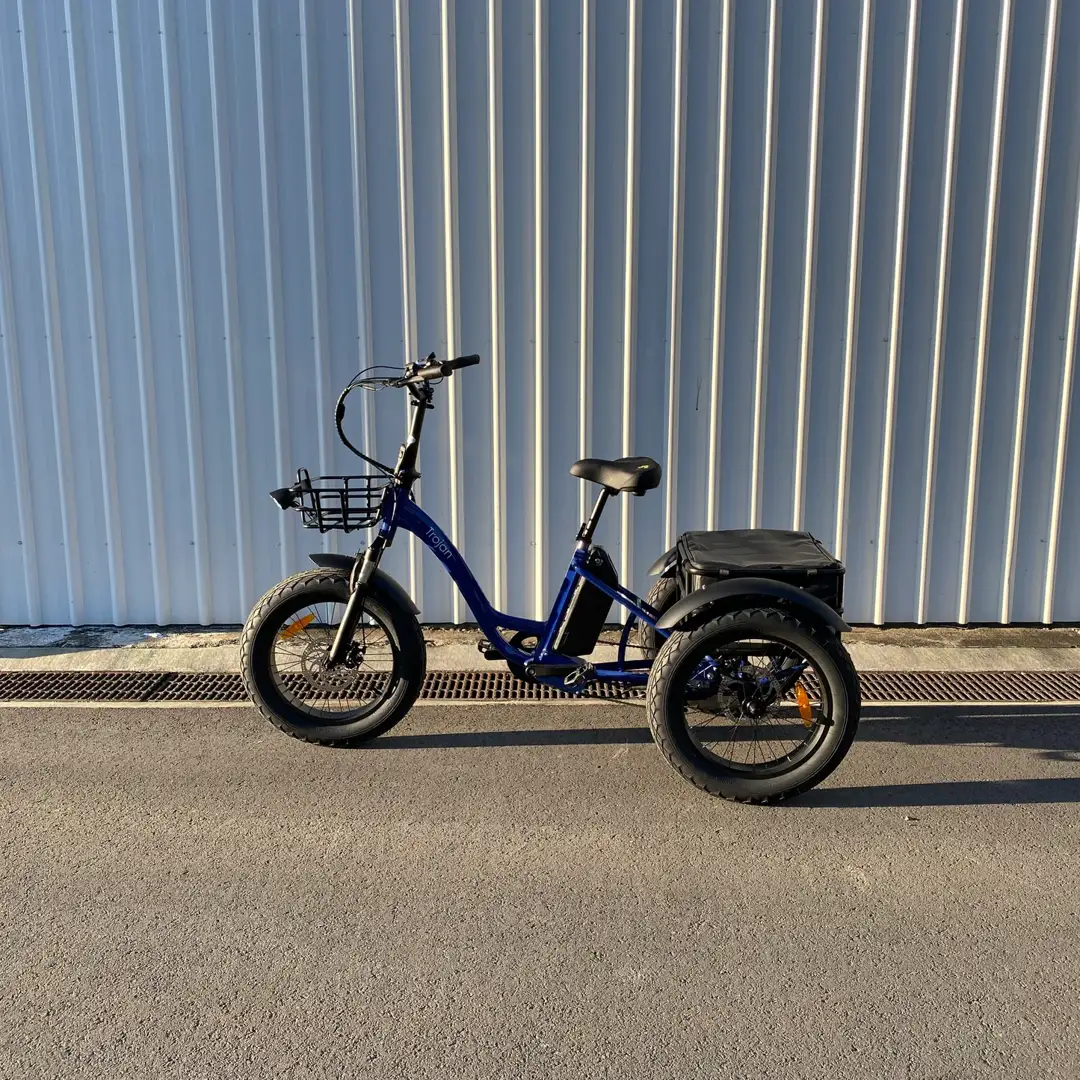
Using an e-trike for errands lets you shop independently while enjoying fresh air. Its stable platform makes loading and unloading safer and easier than on a bicycle.
For more on practical accessories and how e-trikes compare to other mobility options for carrying items, explore these:
What do they cost, what maintenance is required, and are they manageable?
Quality elderly electric tricycles in Australia vary in price based on motor, battery, and components, but maintenance is straightforward and manageable for most seniors. At EveryBody eBikes, we focus on providing excellent value by combining quality components with expert design.
While some customers explore funding options like NDIS or My Aged Care, it is important to know that these processes can involve significant and often lengthy delays. We believe life is too short to spend months waiting for approvals that could be holding you back from freedom and activity today. A private purchase allows you to start enjoying the benefits of your new e-trike immediately.
E-trike maintenance is surprisingly simple. Key tasks include:
- Battery care: Charge it regularly and store it indoors.
- Brake checks: Inspect pads for wear to ensure safe stopping.
- Tyre pressure: Keep tyres inflated to the recommended pressure.
- Chain/belt care: Keep the drivetrain clean and lubricated.
- Annual service: We recommend a professional service every 6-12 months to keep your trike running smoothly.
Our Brisbane workshop can handle all your servicing needs, providing comprehensive support throughout your ownership.
For detailed information on keeping your e-trike in top condition, refer to our workshop resources:
What about legal requirements in Australia & NZ (licence, speed, power, paths)?
In Australia and New Zealand, you do not need a special licence to ride an elderly electric tricycle, provided it meets legal standards for power and speed.
Here are the key legal requirements for a standard "pedelec" e-trike:
- No licence required: No driver's licence, registration, or insurance is needed.
- Speed limit: The motor provides assistance up to 25 km/h.
- Motor power: The motor's continuous power output must not exceed 250W.
- Throttle use: Throttles that work without pedalling are generally restricted to private property.
- Path rules: You can ride on roads and shared paths where bicycles are permitted, but always check local council rules.
- Required equipment: Your trike must have a bell, lights, and reflectors for visibility.
We always advise checking the relevant transport authority website for your state or territory, as regulations can change. For example, the Queensland Government provides clear guidelines for local riders.
Learn more about staying active and understanding mobility options:
What should hesitant first-time riders do next (practice, compare, test ride, support)?
If you're hesitant to try an elderly electric tricycle, we recommend a structured approach: start with a practice plan, compare models, and take advantage of our expert support and test rides.
It's normal to feel apprehensive, so we developed a simple 6-step plan to build your confidence:
- Fit the trike to you: We'll help you adjust the seat and handlebars for a perfect, comfortable fit.
- Practice getting on and off: With the brakes on, practice mounting and dismounting until you're comfortable.
- Ride in a quiet space: Start in an empty car park to get a feel for steering and braking. Remember to take wide, smooth turns.
- Start in low PAS: Begin with the lowest level of pedal assist and gradually increase it as you feel more confident.
- Try a short errand: Once you're comfortable, add a light item to the basket and try a trip to the local shop.
- Book a check-up: After your first 100 to 200 km, bring your trike in for a complimentary check-up to ensure everything is running perfectly.
We also offer confidence coaching and comparison rides in a safe environment. Many riders find their hesitation disappears once they experience the stability and effortless ride of an e-trike. It’s all about refinding the joy of movement without fear.
For more details on how we support new riders and help you find your perfect match, visit:
Conclusion: Ready to roll on three wheels? What’s your next best step?
The journey to refinding your freedom and independence can be simple. Elderly electric tricycles offer a remarkable solution for seniors, addressing balance concerns and physical limitations with practical, enjoyable mobility. We've seen these trikes transform lives, bringing smiles and renewed confidence to riders across Australia and New Zealand.
At EveryBody eBikes, we provide a pathway to a more active life. With personalised fittings, custom adaptations, and dedicated support from our Brisbane workshop, you're in safe hands. We use only high-quality components, including battery cells from trusted brands like Samsung, Panasonic, and LG, because we believe that every body has a right to ride.
If you're ready to explore elderly electric tricycles, we invite you to visit us. Our passionate team will listen to your needs and help you find the perfect three-wheeled companion. The joy of riding freely is closer than you think.
Your next best step is to explore our range and experience the difference for yourself: